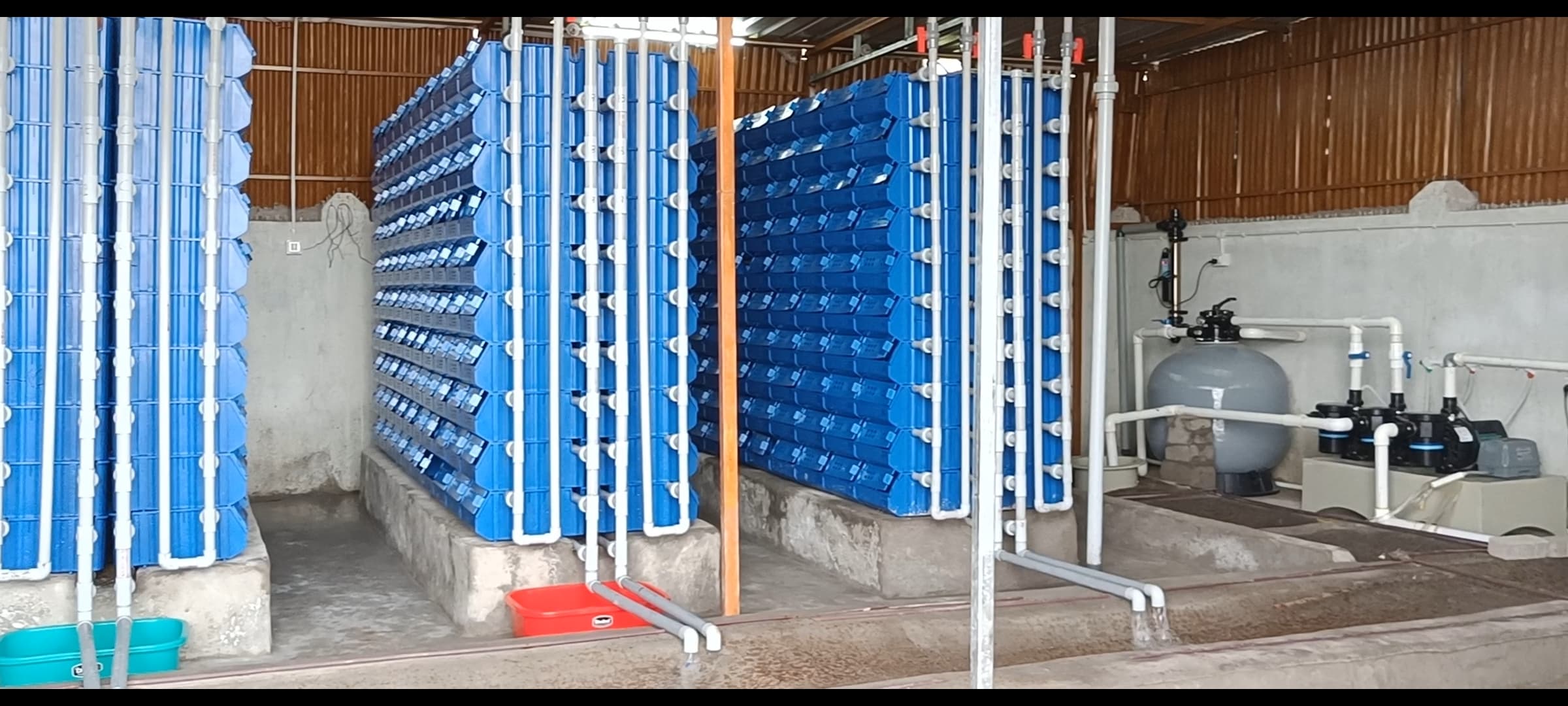
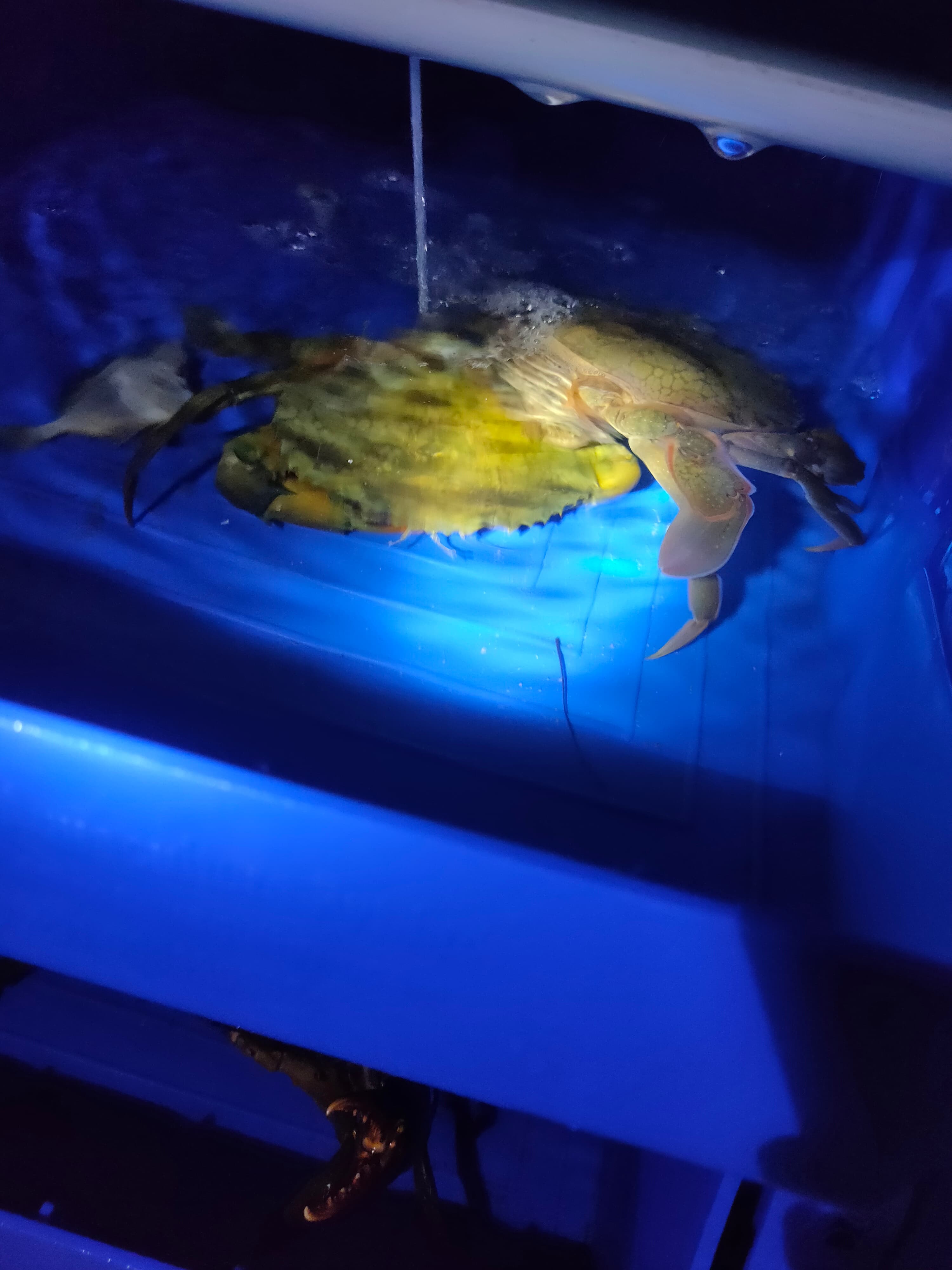
Mud crab sells for 3–4x the price of shrimp. Unlike shrimp, no one has industrialized it.

India exports 4,500 tonnes a year — and still can’t supply it reliably.

We are not building a better farm. We are building the modular RAS and AquaOS that give processors a 365-day, export-grade supply chain instead of a seasonal gamble.

Institutionally backed

DPIIT Recognised Startup
KIIT-TBI Incubated
DST NIDHI PRAYAS Supported
BIRAC BIG Grant Recipient
Crabionics modular grow-out and RAS hardware

The problem

Mud crab farming was never designed as a controlled system

Forty years, no change in production architecture. Result: 50–70% mortality per cycle, 100% wild-seed dependency, and India exporting just 4,500 tonnes while Europe pays a scarcity premium of $51 per unit.

50–70%

Cycle mortality

$51

Europe — per unit

4,500 t

India annual export

100%

Wild-seed dependency

Cannibalism

Mud crabs kill each other

Pack mud crabs into a shared pond and the strong ones tear the soft post-molt crabs apart within hours. Entire batches vanish before harvest. The industry has tried isolation boxes for years — never with the per-animal control to make them work at production scale.

Vulnerability window

Molt is a blind spot

A mud crab molts every few weeks to grow — and for the day or so the new shell takes to harden, it is defenseless. Without per-animal visibility, you only learn the molt happened when the crab is already gone.

Environmental drift

Water shifts faster than you see it

Oxygen, salinity, ammonia, temperature — all swing with weather and feed load. By the time symptoms show up in the crab, the cycle is already compromised.

No causality

Nothing is tracked individually

A traditional mud crab pond gives you one number at harvest. No growth history, no molt log, no link between an action and an outcome — so nothing improves cycle to cycle.

Crabionics converts biological uncertainty into repeatable production.

The operating principle

Every cycle teaches the next.

Sensors capture biological and environmental signals. The system infers state, computes the right response, and acts — then logs what happened so the next cycle starts smarter.

1

Sensor

Capture telemetry

2

State

Biological signal

3

Decision

Compute response

4

Action

Actuate system

Each cycle feeds the next.

Validation & Execution

Institutionally backed, field-executed

Each name below has put capital or infrastructure behind us.

DPIIT — Department for Promotion of Industry and Internal Trade, Government of India

DPIIT · Startup India

Recognised Startup

KIIT-TBI — KIIT Technology Business Incubator

KIIT-TBI

Incubation

DST NIDHI PRAYAS — Department of Science & Technology, India

DST NIDHI PRAYAS

Innovation Support

BIRAC — Biotechnology Industry Research Assistance Council

BIRAC BIG

Grant — 24th Call

May 2026

DPIIT Recognition

Government of India recognised Crabionics as a startup under Agriculture / Fisheries (DIPP261048).

2026

BIRAC BIG Grant — 24th Call

Awarded under BIRAC's Biotechnology Ignition Grant.

2025

Pilot Infrastructure Scaling

Expansion toward multi-system architecture: hatchery, nursery, soft-shell, RAS finishing.

Want to see it run?